
The figure below shows three different star clusters:
- IC 2948 is an active star-forming region surrounded by an emission nebula. A newly-formed star can be seen emerging from its cone nebula towards the bottom-right, and at the lower-left are several Bok globules which may also eventually collapse to form new stars.
- NGC 4755 is another example of a young star cluster, but one which has exhausted its nebula and is no longer actively forming new stars.
- NGC 3201 is an ancient globular cluster, which formed shortly after our Milky Way galaxy. Whereas the stars in IC 2948 and NGC 4755 are only loosely gravitationally bound and number in the thousands, and these clusters will likely evaporate within the next billion years, globular clusters like NGC 3201 contain hundreds of thousands of stars that remain tightly bound over much longer timescales.
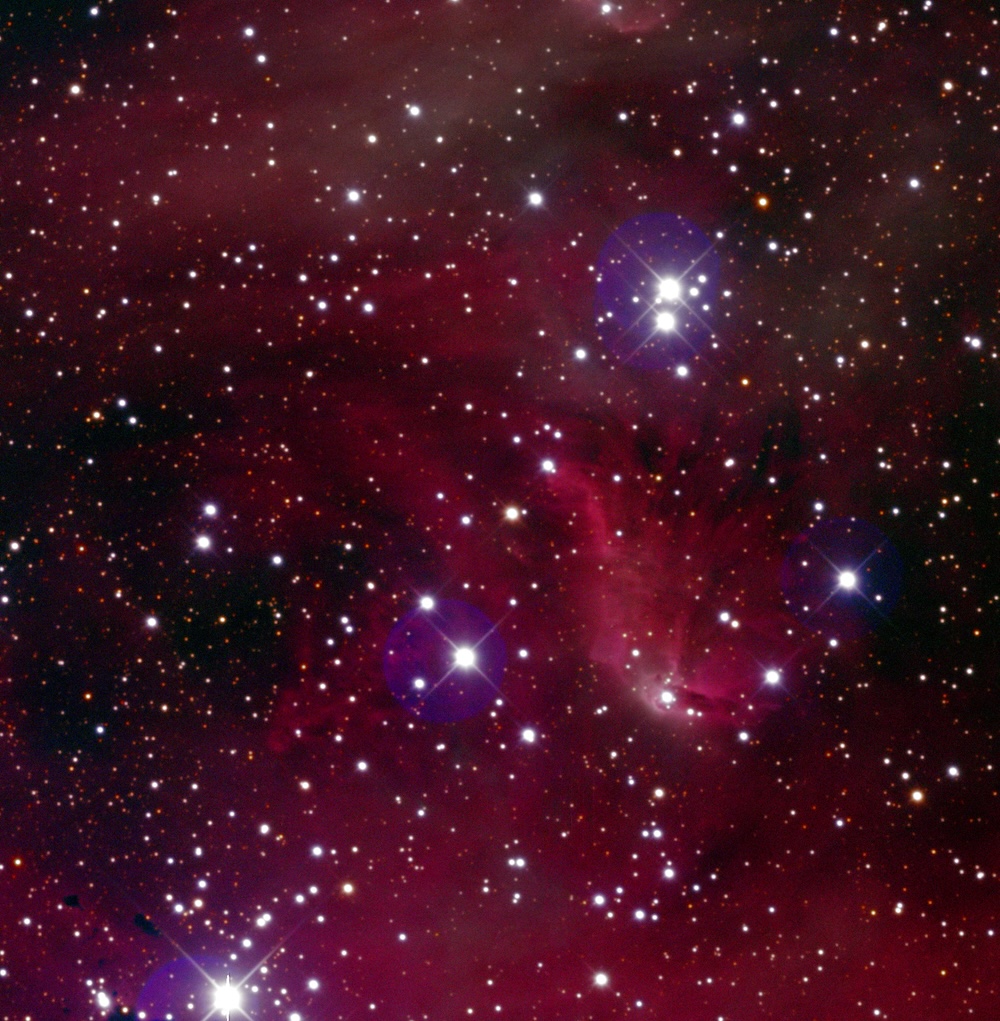
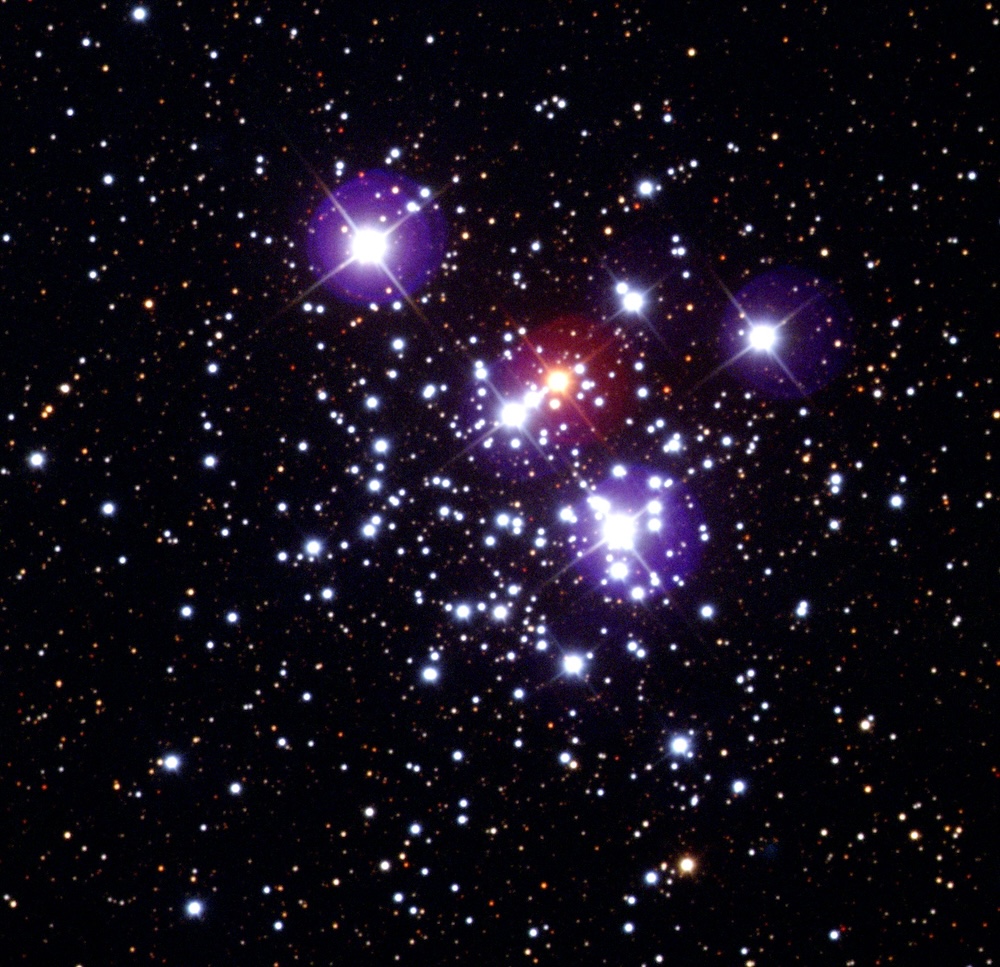
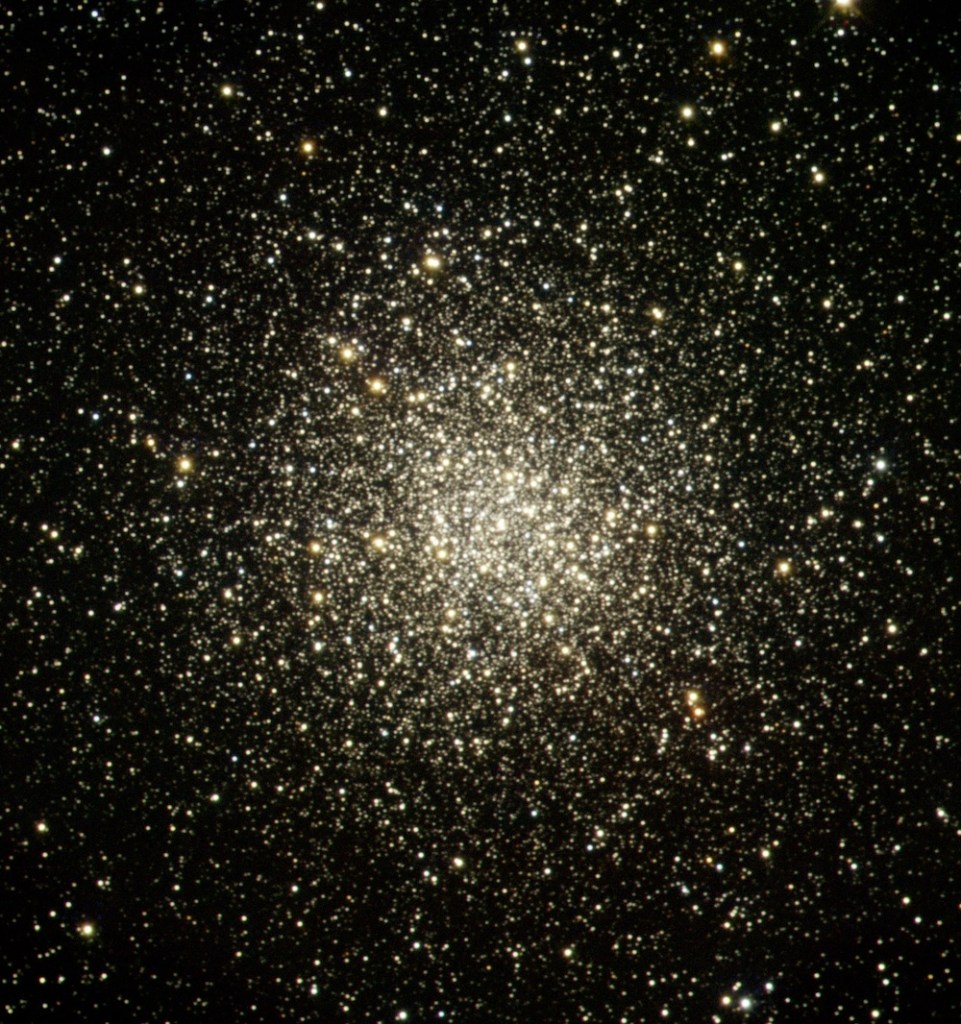
Can you identify the two characteristics that vary most prominently among the stellar populations in these images? If you do a Google image search for “star clusters“, can you confirm that the same two features vary in every cluster’s population?
In this activity you will see that the patterns you just noticed in stellar populations are not accidental. They reflect fundamental physical differences between stars, and they follow clear and predictable relationships. By studying how apparent brightness and colour vary from star to star within a cluster, astronomers are able to determine intrinsic properties such as a cluster’s age and chemical composition, as well as extrinsic properties like its distance and how much interstellar dust lies between the cluster and Earth.
On the next page you will find a brief introduction to the core physical principles that cause stars to differ from one another in these ways.
 cosmiCave.org