
A few decades ago, planets orbiting other stars were unconfirmed speculation.
Today, they form one of the fastest-growing fields in all of science.
Thousands of exoplanets have now been detected, spanning an astonishing range of sizes, orbits, compositions, and environments — from gas giants orbiting in a matter of hours, to frozen rogue planets drifting between the stars, to rocky worlds similar in size to Earth orbiting in the habitable zones of nearby stars.
The Exoplanet Census
The pace of discovery has accelerated dramatically since the launch of dedicated space missions such as Kepler and TESS, combined with ground-based surveys and precision spectroscopy.

Rather than quoting a single number that will soon go out of date, you can always consult the live catalogue maintained by NASA here.
This archive provides continuously updated counts and distributions, including:
- planet sizes and masses,
- orbital periods and distances,
- host star properties,
- and confirmed habitable-zone candidates.
Milestone Worlds
A few discoveries mark major conceptual turning points in the story of exoplanet science:
- 51 Pegasi b — the first planet confirmed around a Sun-like star.
- Proxima Centauri b — the nearest known exoplanet, orbiting our closest stellar neighbour.
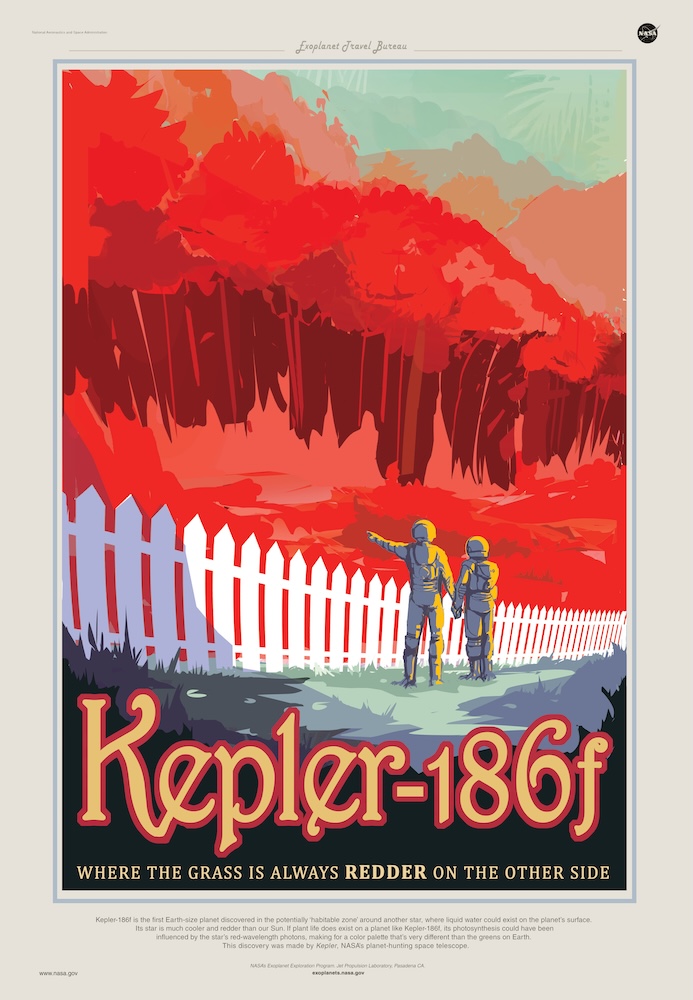
- Kepler-186 f — the first Earth-sized planet discovered in the habitable zone of another star.
- TRAPPIST-1 system — a compact system of seven rocky planets, several in the habitable zone.
- TOI-700 d — an Earth-sized world confirmed by TESS in a star’s habitable zone.
Each of these reshaped how astronomers think about planetary systems — not as rare curiosities, but as diverse and abundant structures throughout the Galaxy.
Then and Now
Early in the field, astronomers relied on computer simulations and speculative illustrations to imagine what distant worlds might look like.
Today, telescopes like JWST directly measure atmospheric composition. Giant observatories such as the ELT and Roman Space Telescope will soon image planets directly and harvest chemical fingerprints from smaller and colder worlds.
The field has matured from artistic imagination… into empirical measurement.
From Curiosity to Measurement
Scientific revolutions often begin with a single discovery.
Exoplanet science is rare in that it experienced many — in rapid succession.
- 1992 — planets around a pulsar.
- 1995 — a hot Jupiter around a Sun-like star.
- 2009 — Kepler launches.
- 2018 — TESS begins its all-sky survey.
- 2022 — JWST opens the chemistry era.
In just one generation, the search for planets went from idea… to catalog… to atmospheric physics.
A New Relationship with the Cosmos
For most of history, people wondered whether other worlds even existed. Now the question is no longer whether planets are out there. It is:
- What are they made of?
- How do they form?
- How do they evolve?
- And in some cases… could anything live there?
Astronomy has crossed a threshold:
We no longer point at stars and imagine planets.
We measure them. We model them. We map their atmospheres.
The Solar System once seemed like the Universe’s template, but exoplanets have taught us otherwise. Nature builds worlds freely — not conservatively. There is no standard design, no single architecture, no typical planet. There are only outcomes of physics… played out across billions of stars.
And now, at last, we are reading the record.
You have completed this course having toured one planetary system in detail. And you now know something far more powerful:
Our system is not special.
But the fact that we can study others… is.
 cosmiCave.org